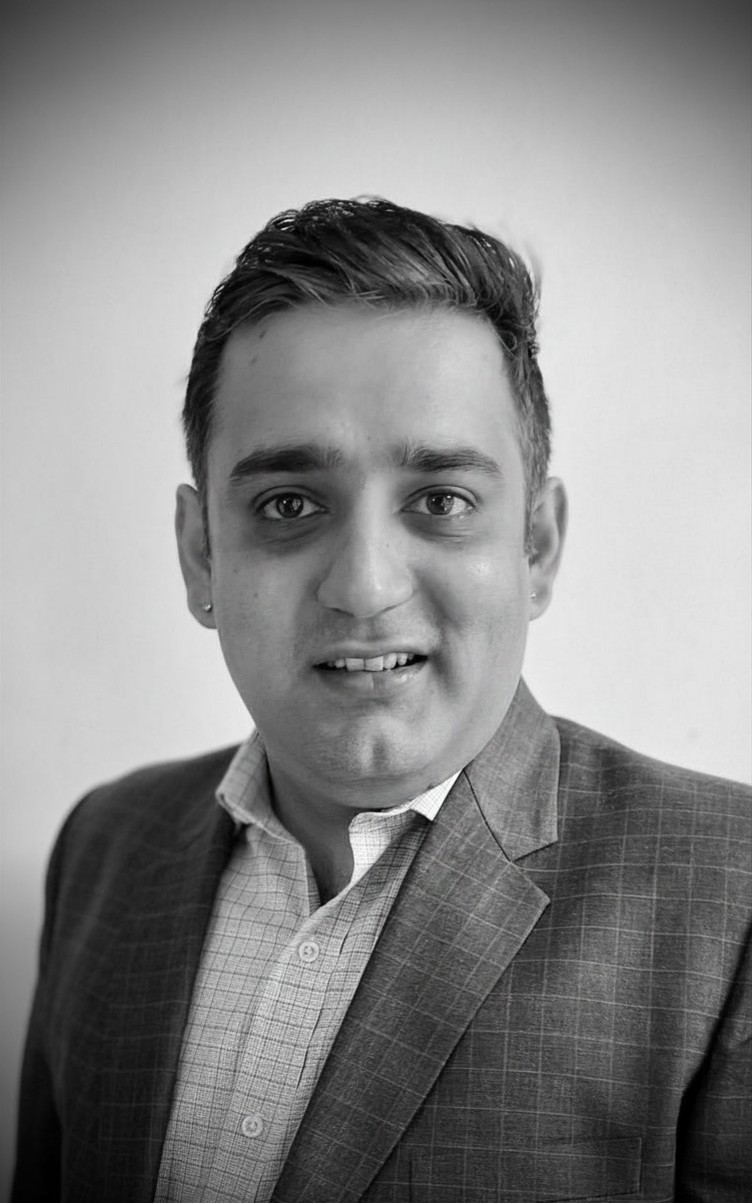
Hi, I’m Paras Katyal.
Most people in healthcare pick a side — clinical or operational, business or technology, strategy or delivery. I never did.
Over the past decade, I’ve worked across the full width of health systems: designing clinical workflows, standing up digital health programs, leading risk adjustment and quality improvement initiatives, and sitting shoulder-to-shoulder with software development teams to build the tools that make it all run. I’ve also coached organizations through the adoption of agile practices — not the textbook version, but the version that survives contact with real institutions, real timelines, and real resistance to change.
What that breadth has given me is a particular kind of usefulness. I can walk into a room of clinicians and understand what they’re protecting. I can walk into a sprint planning session and understand what the engineers need. I can sit in a board-level conversation about strategy and understand what it will take to actually execute. That translation — between worlds that don’t naturally speak to each other — is where most of my best work has happened.
Healthcare is hard. The complexity is real, the stakes are high, and the gap between a good idea and a working implementation is wider than most people admit. I write about that gap — what I’ve learned operating in it, and what I think is worth knowing for anyone else doing the same.
What I Do
Healthcare strategy — I’ve worked with health systems and plans to think through where they’re going and what it will actually take to get there — evaluating digital health programs, shaping clinical transformation initiatives, and identifying where technology investments align with care delivery goals. Strategy in healthcare isn’t abstract; it has to survive contact with regulations, contracts, clinicians, and legacy infrastructure. That’s the version I’ve practiced.
Product management in healthcare — I’ve led the definition, prioritization, and delivery of healthcare products end to end — from identifying the clinical problem worth solving, to working with engineering teams to ship something that actually works in the real world. I understand how to translate complex healthcare needs into clear product requirements, and how to keep a roadmap honest when the environment is constantly shifting.
Risk adjustment and quality improvement — I’ve worked on programs that sit at the intersection of clinical accuracy and financial integrity: closing care gaps, improving HCC capture, and building the workflows that support both. I understand how quality metrics and risk scores connect to outcomes that matter — for patients, for providers, and for the health plans that depend on accurate data.
Agile coaching and organizational transformation — I’ve coached organizations through the adoption of agile practices: not just the ceremonies and the tools, but the mindset shift that makes it stick. I’ve worked with teams at different stages — greenfield adopters, organizations mid-transformation, and those trying to scale what started as a pilot. Real agile is messier and slower than the training deck suggests. I’ve learned what works when the theory meets an actual organization.
How I Think About This Work
A few things I’ve come to believe after a long time in this space:
Technology is rarely the bottleneck. The harder problems are almost always organizational — how people communicate, how decisions get made, how change is managed. I’ve seen excellent technology fail because the people side wasn’t taken seriously, and I’ve seen modest tools succeed because the team behind them was aligned and well-led.
Agile isn’t a methodology — it’s a discipline. The organizations that get the most value from agile aren’t the ones that follow the framework most precisely. They’re the ones that internalize the principles well enough to know when to break the rules.
In healthcare, the stakes are real. Every workflow redesign, every system implementation, every process improvement has a downstream effect on a patient who is probably not at their best the day they need care. That keeps the work grounded in a way that’s hard to replicate in other industries.
This Site
I write about what I’ve observed — in healthcare, in technology, and at the intersection of the two. No proprietary strategies, no internal data — just transferable knowledge: frameworks, patterns, and honest observations about how this work actually goes.
If something I write is useful to you, I’d genuinely love to hear about it.